
PROLOTHERAPY
Prolotherapy and Dextrose-Based Injection Therapies in Gilbert, Arizona
Balance, Resilience & Lasting Wellness
Prolotherapy is one of the oldest regenerative injection therapies. It also happens to be one of the most misunderstood. For years the story was “we inject something irritating, your body inflames, and then it heals.” The mechanism research has moved past that. Prolotherapy works more precisely than we used to think, engaging specific healing pathways at the exact site of injury. Inflammation may still play a small role, but it is a smaller part of the story than the field once believed.
That better understanding of how dextrose works has broadened what prolotherapy actually covers. By its original definition, prolotherapy was a stronger dextrose solution, between 10 and 30 percent, placed into a ligament, tendon, or joint to prompt a repair response by creating inflammation. Newer research has updated that picture on two fronts. At the classical concentrations, the healing response runs mainly through specific repair pathways at the cell level, with inflammation playing a smaller supporting role. And smaller concentrations placed alongside an irritated nerve calm the nerve and support healing on their own. So today, prolotherapy is best understood as one member of a family of dextrose based injections, with the concentration chosen for the specific tissue being treated.
At Solutions Regenerative Medicine in Gilbert and the greater Phoenix area of Arizona, Dr. Mareshah Dunning works across this full range. A prolotherapy injection in Gilbert Arizona may use a lower concentration placed alongside an irritated nerve to calm the nerve and support healing without aggravating it. It may use a stronger concentration in a joint, tendon, or ligament to engage specific healing pathways. Or, in select cases, it may use the strongest end of the range in the classical way, to tighten a lax ligament or shrink a cystic structure through a controlled scarring response. These higher doses can cause more pain aggravation after the injection than the mid range, so they are reserved for specific situations where that tradeoff makes sense. Each choice is matched to the tissue being treated, as part of a broader naturopathic plan rather than a fixed recipe.
Prolotherapy at a Glance
What it is:
What it’s used for:
How it works:
The visit:
Results timeline:
At Solutions Regenerative Medicine:
Dr. Mareshah Dunning delivers the dextrose family with concentrations matched to the tissue and the patient, integrated into a whole person naturopathic care plan.

What Is Prolotherapy and How Does It Work?
First, what is dextrose?
Dextrose is medical grade sugar water. It is the same substance given intravenously in hospitals to correct low blood sugar, and it has been used as an injectable for musculoskeletal pain for more than sixty years. On the SRM tray it is prepared as a solution in whatever concentration matches the target, usually somewhere on the spectrum from 5 percent or less for nerves to 25 percent for connective tissue targets.
So what is prolotherapy today?
The word itself breaks apart cleanly. Prolo comes from proliferation. Therapy is the treatment. Prolotherapy, then, is a therapy designed to stimulate the proliferation and repair of connective tissue. It was formalized in the 1950s by Dr. George Hackett, a general surgeon in the United States, and has been in clinical use for chronic musculoskeletal conditions ever since. Multiple substances have been used historically to trigger the repair response, but the standard modern proliferant, and the one SRM uses, is dextrose. Dextrose is classified as an osmotic irritant by that older taxonomy, though its actual mechanism is more receptor-mediated than the label implies, as we get into below. Strictly speaking, the classical definition refers to a mid concentration dextrose injection, typically 10 to 30 percent, delivered into a ligament, tendon, or joint to trigger that repair response. In everyday clinical use the term has expanded. It now serves as shorthand for the whole family of dextrose based injection therapies, including perineural and lower concentration work that used to sit outside the classical label.
How does dextrose actually work?
The mechanism depends on where the dextrose is placed and at what concentration, but the most important thing to say up front is that the primary response is triggered through specific cell receptors and growth factor signaling rather than through cell lysis caused by osmolarity shifts. Experimental work with osmolarity-matched controls has shown that hyperosmolarity alone does not produce the proliferative response, meaning dextrose is engaging tissue through specific receptor pathways rather than by damaging cells. Inflammation appears to be a smaller and mixed part of the picture. Some studies show anti-inflammatory effects, such as downregulation of IL-1β driven cartilage-degrading enzymes, while others show pro-inflammatory signaling in specific tissues, such as elevated COX-2 in tenocytes. The precise balance is still being worked out.
At the nerve level (lower concentrations). Dextrose quiets small pain nerves that have become overactive, reducing the chemical signals the nerve was releasing into surrounding tissue. That lowers both the local inflammation around the nerve and the pain signal traveling to the brain. Chronic injuries often get stuck in a prolonged inflammatory state that keeps the body from moving into the active healing phase. By lowering that inflammatory drive and supporting the cells that build and repair connective tissue, lower concentration dextrose can help the healing process resume where it had stalled. The low dose and rapid clearance are what keep the response therapeutic rather than irritating.
At the connective tissue level. At classical prolotherapy concentrations, dextrose engages the tissue through several complementary pathways: it activates repair receptor signaling and quiets the enzymes that degrade cartilage. Low concentration dextrose is also directly anabolic on fibroblasts. The anabolic effects on chondrocytes actually peak at concentrations below 5 percent, well under the 12.5 to 25 percent used clinically. Collagen production and cell proliferation peak around a few percent, while aggrecan expression peaks even lower. Because the body clears the injected solution quickly, a stronger injection likely sweeps down through both of these effective windows on the way out, which may engage multiple layers of the healing response from a single dose. Human biopsy work has documented morphological cartilage regeneration after a course of intra articular 12.5 percent dextrose in a small case series, and separate imaging follow-up work has reported observations of increased cartilage thickness and joint space in some patients.
Bringing it together. Dextrose is best understood as a signaling injection with several complementary effects, not as an irritant that provokes inflammation. It can modulate pain firing at the nerve level, calm neurogenic inflammation, upregulate anabolic repair pathways in cartilage and connective tissue, and suppress the degradative enzymes that break tissue down. Concentration decides which of these effects dominates. Head to head trials do not cleanly show that higher concentrations produce better clinical outcomes across the board, and clinical and in vitro work at lower concentrations has consistently reported fewer side effects and less post injection soreness. This is why concentration is matched to both tissue and patient rather than pushed to the top of the range by default.
Why concentration is matched to the tissue and the patient
Because the mechanism is receptor mediated, the concentration is picked for the tissue AND the patient in front of Dr. Dunning, not from a one size fits all recipe. If the patient or the tissue is hyperinflamed, a lower concentration is often the smarter choice. Higher concentrations can offer a stronger repair signal, but they can also be more irritating and aggravate pain in an already reactive area. The tradeoff gets weighed against the specific tissue and the specific patient. Perineural targets, where the goal is to soothe an irritated nerve and reset local pain signaling, use 5 percent or less dextrose. This is the concentration behind John Lyftogt’s “neurogenic prolotherapy” approach and is what has shown up as first ranked among injection options for carpal tunnel in a recent network meta analysis. For joint, ligament, and tendon work, Dr. Dunning typically chooses a concentration between 5 and 20 percent based on the clinical goal. A joint presentation where the goal is to modulate the environment and support cartilage may sit in the middle of that range, while a ligament or tendon target where a stronger repair signal is warranted may push toward the higher end. One recipe does not fit every tissue, and the newer mechanism data is what makes that lower end of the spectrum defensible as its own therapy rather than an underpowered version of “real” prolotherapy.
How Dextrose Injections Are Performed at Solutions Regenerative Medicine
Dr. Dunning treats dextrose injections as precision procedures. The diagnosis, the target, the concentration, and the guidance modality all shape what the patient actually receives. The process typically runs across two visits.
Visit 1. New patient evaluation (about 1.5 hours). A complete history and physical exam, with labs or imaging ordered as needed. If imaging or lab review calls for additional clarification before injection, a brief intermediate follow-up may be added.
Visit 2. Injection visit (about 60 minutes). A quick check-in on how the patient is doing, followed by the diagnostic injection placed under ultrasound or fluoroscopy. The dextrose is targeted precisely at the suspected pain generator identified during the evaluation. Imaging alone does not always identify the true source of pain. Some findings on an image are present without causing pain, and some real pain sources never show up on imaging. Dr. Dunning watches for the patient’s in-office response as the treatment is delivered, which is how the pain generator is confirmed and the diagnosis closed in the same visit.
The sections below explain what makes each step different at SRM.
Diagnostic first: confirming the true pain generator
Dr. Dunning uses dextrose injections in two overlapping ways. The first is diagnostic-therapeutic. A targeted injection into a suspected pain generator can confirm which structure is driving symptoms and, at the same time, deliver a real therapeutic dose. That gives us cost-effective information about how the tissue and the patient respond. If the response is strong, we can continue with prolotherapy rather than stepping up to options like PRP, A2M, BMAC, or micronized fat. If the response is limited or the tissue profile calls for more, we consider stepping up. The second use is prolotherapy as a stand alone therapeutic series when the profile fits from the start. Leading with the diagnostic-therapeutic use protects patients from stacking treatments onto the wrong target and lets any escalation decision be earned by the response.
Concentration matched to the tissue and the patient
Rather than following a fixed protocol, Dr. Dunning picks the concentration for the specific tissue and the specific patient. Nerve targets take low concentrations. Connective tissue targets take mid to higher concentrations. Within each of those, the exact number is adjusted for the joint, the presentation, and how reactive the tissue is.
The specific concentration follows the tissue and the patient:
2.5 percent or less for muscle, scar tissue, and trigger point work. Trigger point injections typically use a 5 percent dextrose solution mixed with a small dose of local anesthetic, which puts the effective dextrose concentration in the muscle at roughly 2.5 percent or below, releasing neurogenic tension and pain in the muscle. The same low concentration range can be used around scar tissue to free up superficial nerves trapped in adhesions. And this concentration sits directly within the chondrocyte anabolic window from the research above, so it can also be placed inside a joint when the primary goal is cartilage repair without a stronger inflammatory signal.
5 percent or less for nerve targets: irritated peripheral nerves, chronic post-surgical nerve pain, pinched or compressed nerves such as carpal tunnel, and select low back presentations. The primary intent is to nourish and calm the affected nerve. In the right patient, 5 percent dextrose can also engage the anabolic repair range from the research above, so a single injection may do both jobs when the clinical picture calls for it.
5 to 20 percent for connective tissue targets: joints, ligaments, tendons, and their attachment points. The lower end of this range supports cartilage repair and calms neurogenic inflammation. Middle to upper concentrations provide a stronger repair signal for joint, tendon, and ligament work. The specific choice varies by the person’s inflammatory status, the target tissue, and the clinical goal.
The choice between these bands is made from history, physical exam, and the tissue in front of us, not from a preset menu.
Fit to the patient matters as much as fit to the tissue. Younger, healthier patients with good nutrient status tend to respond more robustly to dextrose injections. Older patients with multiple comorbidities may respond more slowly, though it is not unusual to see an older, well nourished patient respond just as well as someone half their age. This is why these injections are fit to the person rather than dropped from a menu. It is also why the same dextrose injection often doubles as a therapeutic diagnostic tool, since the pattern of response itself tells us something about the tissue, the drive of the pain, and what to do next.
Image guidance for diagnostic accuracy
Because the first injection is often diagnostic, image guidance matters most for confirming that the dextrose actually reaches the specific pain generator we are testing. Deeper joint, spinal, and nerve targets are placed under ultrasound or fluoroscopy for this reason. Superficial perineural and trigger point work are often placed by palpation, with the guidance choice based on the technique the injection requires.
Who Is a Good Candidate for Prolotherapy or Perineural Dextrose?
Candidates span acute, sub-acute, and chronic musculoskeletal or nerve-related pain. The most common starting point is chronic pain that has not fully responded to time, activity modification, and conservative care. More recent problems can also fit, especially when nerve irritation is part of the pain picture. The candidates below are grouped by the kind of injection used.
Classical prolotherapy indications (10 to 30 percent)
These are ongoing problems in joints, ligaments, and tendons that have not healed on their own. Osteoarthritis is one of the biggest categories. Mild to moderate knee osteoarthritis is where the strongest research sits. Prolotherapy is also used in the hip, shoulder, ankle, and the small joints of the hands and feet, with evidence that is growing but less established than for the knee. Other common examples at SRM include tennis elbow, heel pain from plantar fasciitis, nagging Achilles pain, chronic low back or SI joint pain, and shoulder, hip, or ankle pain where a tendon attachment or ligament is the real problem.
Perineural indications (5 percent dextrose)
This is the newer and fast-growing side of the dextrose family. Instead of building up ligament, tendon, or joint tissue, the primary goal is to calm an irritated nerve. Because most pain carries some nerve irritation along with it, this type of injection can help across recent, lingering, or long-standing problems, not only classic nerve syndromes. Common uses include pinched or compressed nerves like carpal tunnel syndrome. It also helps tingling or numbness from an irritated nerve, lingering pain after surgery, pain along small nerves running under the skin (an approach developed by Dr. John Lyftogt), and specific lower back pain patterns. Dr. Dunning also uses nerve hydrodissection, which gently opens space around a nerve that has been pressed on by scar tissue or tight fascia, by injecting fluid around it. Perineural work takes real skill. The target is the space around the nerve, not the nerve itself, and the volume and placement matter as much as the concentration.
When Dextrose Injections Are Probably Not the Right Fit
Dextrose injections are not the right first step for everyone. Reasons an alternative would be recommended include:
Acute fracture or bony instability that needs orthopedic evaluation rather than an injection.
Active infection at the planned injection site or systemically.
Uncontrolled bleeding disorder. Patients on blood thinners can still be candidates for certain injections depending on the location and the nature of the condition; clearance from the prescribing provider may be needed.
End stage joint collapse where a mechanical solution such as joint replacement is the appropriate next step.
If dextrose is not the right option, Dr. Dunning will say so and walk through what would be a better fit, including surgical or specialty referral when that is the more appropriate step.
Restoring Function. Improving Quality of Life.
Personalized Care with Regenerative and Naturopathic Medicine.
What Can I Expect During and After a Dextrose Injection?
A dextrose injection visit at SRM is a single in office procedure that usually takes 30 to 60 minutes. The visit opens with a brief check-in on how you are doing and a review of the plan for the day. You are positioned so the target area is accessible. Joint, spinal, and nerve targets are prepared with sterile technique and placed under real time ultrasound or fluoroscopy guidance. A small skin anesthetic is used for comfort when needed. Superficial perineural and trigger point injections are prepared with clean technique and placed by palpation, which keeps them quick and accessible when the location allows it.
What you feel immediately after the injection depends on what was placed and where. For classical prolotherapy into a joint, ligament, or tendon, a skin local anesthetic is used to keep the injection comfortable. Any discomfort from the needle itself resolves quickly once the anesthetic is on board. If the anesthetic reaches the suspected pain generator at the target, the immediate relief can also serve as a diagnostic signal confirming we found the right structure. The higher dose dextrose itself works on a different timeline, building its therapeutic effect over a 3 to 6 week healing window and continuing through the series. For a perineural injection, there is no local anesthetic in the solution, so any immediate relief comes directly from the dextrose quieting the irritated nerve. For a trigger point injection, which does use a small amount of local anesthetic, the immediate muscle softening comes from the anesthetic and the needle itself, while the dextrose contributes the longer-term reset.
Most patients feel mild soreness or stiffness at the injection site for about 72 hours. That is expected and reflects the repair signal doing its job. Gentle movement helps. Avoid NSAIDs during this window. Tylenol is fine if something is needed. Based on your needs, Dr. Dunning may also recommend specific supplements that help keep inflammation in a healthy range during this phase. Written guidance for the specific area treated is provided, and most patients get back to their usual daily activities the next day.
Some reach meaningful results after a single visit, while others need combination therapies or multiple injections to reach the same point. Results vary because these injections work with your body’s own healing system. For classical prolotherapy, functional gains typically build progressively across the series, with landmark knee osteoarthritis trials showing continued improvement out to 52 weeks and long-term follow-up documenting progressive gains that may continue up to 2.5 years. For perineural work, the effect builds over the first week after each injection, and sessions tend to stack from one visit to the next.
Are Dextrose Injections Safe?
Prolotherapy has a strong safety record when performed by an experienced injector. In the safety literature on dextrose prolotherapy for chronic musculoskeletal pain, adverse events are dominated by short-lived soreness or stiffness at the injection site, and serious complications are rare. What makes an injection safer in practice comes down to a few things: the experience and training of the provider, image guidance where appropriate, careful patient selection, and a thorough workup before the needle is placed. These are the pieces that most reduce the risk of a poorly matched procedure or a disappointing outcome.
Why Choose Dr. Dunning at Solutions Regenerative Medicine?
Dr. Mareshah Dunning brings together high level skills that are rarely offered in one clinic among regenerative medicine providers generally. She is a licensed Naturopathic Medical Doctor, a Registered Musculoskeletal Sonographer, faculty lead of the Regenerative Medicine Honors Track at Sonoran University of Health Sciences, a board member of the Naturopathic Orthopedic Medicine Academy, and completed a fluoroscopy focused residency under an interventional anesthesiologist and general surgeon at the Neil Riordan Center. That combination lets her integrate root cause naturopathic care, precise interventional technique, and evidence updated regenerative biology into a single plan for patients in Gilbert, Arizona and the greater Phoenix area.
The clinic culture at Solutions Regenerative Medicine is built around patients feeling heard, evaluated thoroughly, and given a real plan. Many patients arrive as their last stop before considering surgery. Some choose prolotherapy. Some choose a different biologic. The most important step is the one that starts with an accurate diagnosis and an honest conversation.
Ready to Take the Next Step?
Dr. Mareshah Dunning at Solutions Regenerative Medicine in Gilbert, Arizona offers personalized consultations to determine whether prolotherapy or a perineural dextrose approach is right for you. Book a consultation with Dr. Dunning or call (480) 995-9131.
Explore the full range of regenerative injection therapies, learn about Dr. Dunning’s background and training, or read more about our naturopathic philosophy of care.
Frequently Asked Questions
Is prolotherapy the same as PRP?
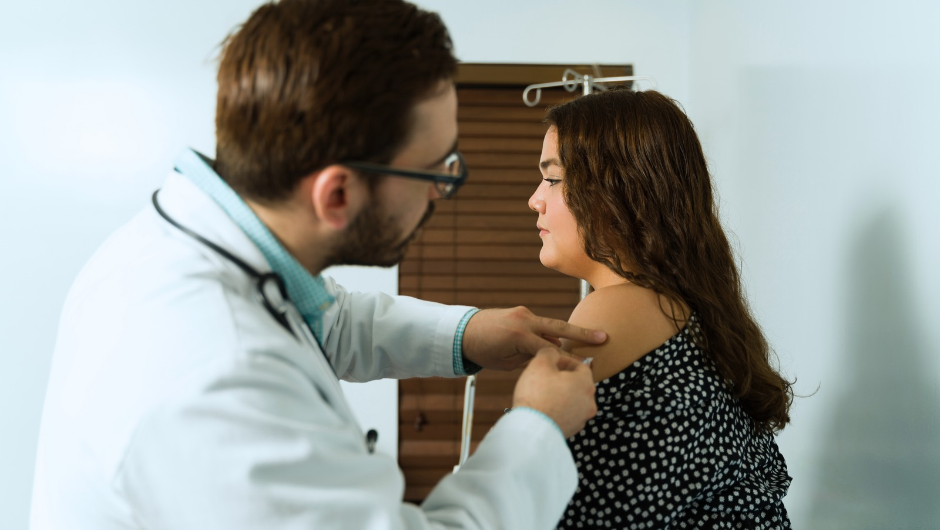
No. Prolotherapy and PRP are both used to treat many of the same joint, tendon, ligament, and nerve problems and work along the same healing pathways. The difference is what each is made of and how strong the signal is. Prolotherapy uses a dextrose solution. PRP uses your own concentrated platelets and growth factors, prepared from a small blood draw. Prolotherapy is often the first step or a diagnostic injection. PRP may be recommended when the tissue profile calls for a stronger regenerative signal.
What is perineural prolotherapy, and is it different from classical prolotherapy?
Perineural prolotherapy uses a lower concentration of dextrose (5 percent or less) placed around an irritated nerve to calm it. Classical prolotherapy uses higher concentrations placed into ligaments, tendons, or joints to support repair. Both are part of the dextrose injection family, and the choice is based on what is driving the pain.
How many prolotherapy sessions will I need?
Most patients complete 3 to 6 sessions spaced 3 to 6 weeks apart, with the plan tailored to the tissue, severity, and your response. Overall health plays a role too. Patients with good nutritional and metabolic status often need fewer sessions. Chronic or multi-region pain may need more.
What are the common side effects?
The most common side effect is mild soreness or stiffness at the injection site for about 72 hours. This is expected and reflects the body’s healing response. Serious adverse events are rare in experienced practice. Your provider will review your history and medications before proceeding to flag any specific precautions.
Does prolotherapy work for nerve pain or carpal tunnel?
Yes. Prolotherapy is used for nerve pain and carpal tunnel syndrome. A lower concentration dextrose solution (typically 5 percent or less) is placed along or around the irritated nerve to calm it and support healing. The injection may be placed by palpation for surface nerves or under ultrasound guidance for deeper nerves, depending on the location.
Does insurance cover prolotherapy injections?
Insurance coverage for injections varies by plan. Solutions Regenerative Medicine is a superbill practice, so patients pay at the time of service and receive a superbill they can submit to their insurance. Depending on the plan, portions of the visit may be eligible for reimbursement. HSA funds can usually be applied. Costs are discussed transparently during consultation.
Is Prolotherapy the Same as PRP?
Is Prolotherapy the Same as PRP? A Gilbert Regenerative Medicine Guide Patients often ask, is prolotherapy the same as PRP?

Prolotherapy vs Cortisone Shot
Prolotherapy vs Cortisone Shot What Every Arizona Patient Should Know If your knee, elbow, hip, or shoulder has ached for
Is BMAC the Same as PRP?
Is BMAC the Same as PRP? What Patients in Gilbert, Arizona Should Know Quick Answer The short answer is no.

Is BMAC the Same as Micronized Fat?
Is BMAC the Same as Micronized Fat? What Patients in Gilbert, Arizona Should Know Quick Answer The short answer is

How Long Do A2M Injections Last?
How Long Do A2M Injections Last? What the evidence shows and what shapes real-world duration. Quick Answer How long an

How Long Does It Take A2M to Work?
How Long Does It Take A2M to Work? The straight timeline from day one to week twelve, without the marketing
Solutions Regenerative Medicine
3530 S Val Vista Dr Ste A111
Gilbert, AZ 85297
REAL RELIEF IS A CONSULTATION AWAY
Schedule an Appointment Today!
*All indicated fields must be completed.
Please include non-medical questions and correspondence only.