BMAC Injections
BMAC Injections in Gilbert, Arizona
Your body’s own repair biology, concentrated and delivered where you need it.
BMAC goes to the source. It draws from your own bone marrow, a tissue that naturally holds growth factors and stem cell populations along with the other cells and signals your body uses to heal itself, and concentrates those components for delivery directly to an injured joint, tendon, or ligament. If you are familiar with PRP, BMAC follows the same principle but draws from a richer biological reserve than blood alone. If your pain has outlasted rest, physical therapy, and the usual pain injections, and you are looking at what comes before surgery, a BMAC injection in Gilbert Arizona is one of the regenerative treatment options that draws directly on the tissue where your body stores its own repair capacity.
At Solutions Regenerative Medicine, based in Gilbert and the greater Phoenix area of Arizona and serving patients traveling from across the United States, Dr. Mareshah Dunning uses BMAC as a targeted, image guided part of a broader naturopathic and interventional plan. When it is the right fit, the goal is not to mask pain. It is to change the biological environment of the injury so the body can do more of the healing itself.

BMAC at a Glance
What it is:
A concentrated preparation of your own bone marrow, drawn from the back of your pelvis and injected into or around an injured joint, tendon, ligament, nerve, or bone using real time imaging. |
What it’s used for:
Chronic joint pain, arthritis, tendon injuries, cartilage damage, nerve pain, and slow to heal bone that have not responded to conservative care. Often chosen by patients who want a regenerative option before considering surgery, want to reduce their reliance on pain or anti inflammatory medications, or want to take a preventative approach to joint and tissue health. |
How it works:
The visit:
Typical course:
Results timeline:
At Solutions Regenerative Medicine:
What Is BMAC and How Does It Work?
First, what is bone marrow?
Bone marrow is the soft, spongy tissue that fills the inside of many of your larger bones, most abundantly in the pelvis, sternum, ribs, and vertebrae. It is where your body naturally makes its blood cells. Marrow contains two coexisting stem cell populations that work together to make this happen: hematopoietic stem cells, which give rise to every type of blood cell (red cells, white cells, and platelets), and mesenchymal stem cells, which build and maintain the supportive environment for those blood forming cells and can also form bone, cartilage, and fat.
Alongside those two stem cell populations, marrow contains a rich mix of growth factors, immune signaling molecules, and platelets. In other words, bone marrow is not just a source of blood cells. It is a naturally occurring reserve of the cells and signals the body uses to repair itself.
So what is BMAC?
BMAC is a concentrated preparation of your own bone marrow. A small amount is drawn typically from the back of your pelvis, processed on the same visit, and injected into the injured area under ultrasound or fluoroscopy guidance. The concentration step increases the density of the cells and repair signals that are already present in marrow, so that a concentrated dose can be delivered directly to your injury.
How does BMAC work in an injured joint or tendon?
A common misconception is that BMAC works because stem cells grow into new tissue. That is not what actually happens. BMAC works by sending signals into the injury environment that change how the body responds. The injected cells and signaling molecules help rebalance the inflammatory environment of the injured joint or tendon, shift immune activity from breakdown toward repair, and support the body’s own healing pathways.
The platelets in BMAC also form a temporary fibrin matrix at the injection site, a soft biological scaffold that helps hold the delivered cells and signals in place, supports cell attachment, and provides an early framework for the healing response before being resorbed as the tissue remodels.
The injected material and cells eventually clear from the treated area. What lasts clinically is not the physical presence of the cells but the biological response they set in motion, which is why a treatment that leaves the body over time can still produce months to years of clinical benefit.
Why BMAC is called a procedure, not a product
Clinical experience has shown that the response to BMAC depends more on the composition of the concentrate, the cells, growth factors, and signaling molecules it contains, than on the volume of marrow drawn. Two BMAC preparations can look identical in the syringe and be biologically very different. That is why the harvest site, harvest technique, and processing system all matter, each shapes what actually ends up in the final concentrate.
How BMAC Is Performed at Solutions Regenerative Medicine
How BMAC is performed matters. Small differences in how the marrow is drawn, processed, and delivered change what the patient actually receives. The full BMAC procedure follows a defined sequence:
- Step 1. Harvest a small amount of bone marrow from the back of the pelvis under local numbing.
- Step 2. Process the aspirate in the office using a validated closed system concentrator, typically 15 to 30 minutes.
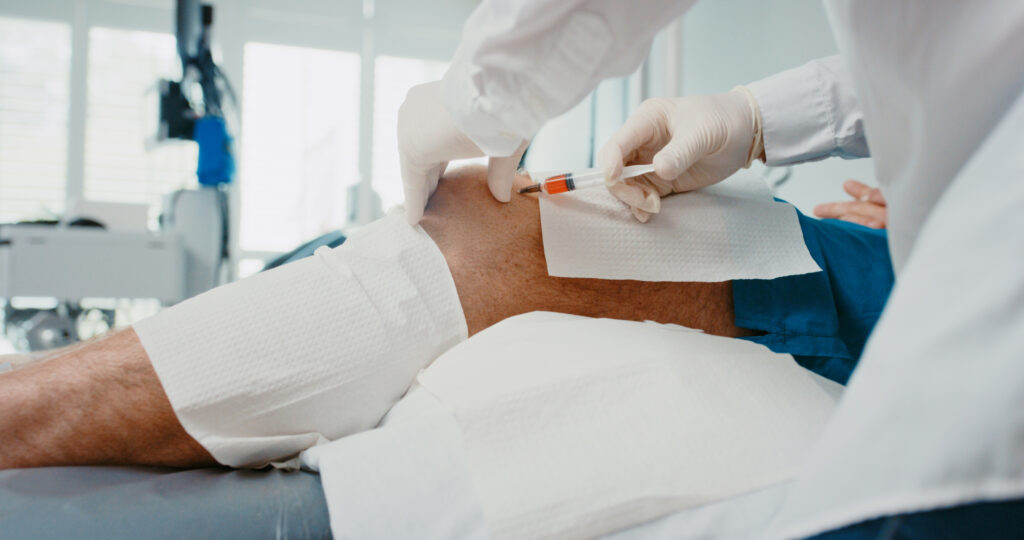
- Step 3. Inject the concentrate into the target joint, tendon, or ligament under ultrasound or fluoroscopy guidance.
The procedure is performed under sterile technique from harvest through injection. Total chair time is about 60 to 120 minutes depending on the complexity of the case. The paragraphs below explain what makes each step different at SRM.
Harvest site: the posterior iliac crest
The posterior iliac crest is Dr. Dunning’s harvest site of choice because it is the most cell rich zone of the pelvis and yields the highest concentration of active marrow progenitor cells among the sites accessible in an outpatient setting. The pelvis also offers a favorable bone mineral density profile, which makes it one of the safest and most reliable places in the body to draw a bone marrow sample. Local anesthetic is used at the harvest site so that patients are comfortable during the aspiration. Most patients describe the sensation of the actual draw as a deep pressure or brief pulling feeling rather than a sharp pain, the skin, deeper tissue, and periosteum over the bone are numbed first, and the fullness of each small volume being pulled resolves quickly between draws.
Harvest technique: single site, layered depths
Rather than making several separate punctures, Dr. Dunning uses a single insertion site and pulls small volumes from different depths along that same track, working from deeper marrow toward more superficial marrow. This layered approach captures the areas of the harvest zone with the richest progenitor cell content while limiting how much peripheral blood dilutes each pull. It matches multi site harvest for cell yield while being meaningfully less painful for the patient. The aspirate is anticoagulated with heparin, which preserves cell function better than alternatives in the outpatient setting.
Processing: closed system concentrator
At Solutions Regenerative Medicine, the aspirate is processed using a closed system concentrator that separates and concentrates the active marrow components while limiting red blood cell and plasma contamination. Processing takes place onsite while you rest between the harvest and the injection, so that the cells are prepared and delivered on the same visit. This is different from PRP, where blood is used therapeutically. During BMAC harvest, peripheral blood dilutes the marrow cells and reduces the concentration of the marrow specific components the treatment is designed to deliver, which is why careful harvest technique and processing matter.
Injection: image guided
The final concentrate is delivered under real time image guidance, with the modality chosen based on the target. Superficial joints, tendons, and ligaments are typically ultrasound guided; spine level and deeper structures are usually fluoroscopy guided.
Who Is a Good Candidate for BMAC?
Good candidates for BMAC tend to have moderate structural injury with enough biological runway left for a repair signal to matter. That includes mild to moderate osteoarthritis, partial thickness rotator cuff and other tendon injuries, chondral and osteochondral defects, and non healing fractures and stalled bone healing.
For most patients, the reason BMAC comes onto the table is that they are trying to move away from two things: chronic opioid or anti inflammatory use, and a joint replacement or other structural surgery they are not ready for. Best documented results are in the earlier disease stages described above. Advanced imaging findings alone do not rule a patient out. Patients with more advanced changes often report meaningful improvement in pain and function at one year and beyond, especially when the goal is protecting activity and delaying surgery.
Dr. Dunning evaluates candidacy through a full history, imaging review, and often a diagnostic injection sequence that helps confirm the true pain generator before advancing to BMAC.
When BMAC Is Probably Not the Right Fit
Imaging alone does not decide candidacy. Pain and functionality drive most decisions about whether to consider surgery, not the K-L grade or MRI report by itself, and many patients with more advanced imaging still respond meaningfully to biologic injections. That said, there are situations where BMAC is not the right next step:
- True mechanical instability (a joint that frankly locks, buckles, or repeatedly gives way to the point that weight bearing is unreliable), where a structural problem clearly requires a surgical answer and continuing without one would meaningfully accelerate damage to the joint.
- Active infection at the planned injection site or systemically.
- Uncontrolled hematologic disease or suspected marrow pathology.
- Pregnancy, as a relative contraindication where safety data are limited.
- Patients whose goals are only achievable with a structural mechanical change and for whom joint replacement or another definitive procedure is clearly the better fit.
When surgery is the more appropriate step, BMAC is also used by some orthopedic surgeons as a biological augment during procedures such as rotator cuff repair, cartilage repair, and spinal fusion. That is a decision made by the surgical team, not part of the outpatient regenerative injection care Dr. Dunning provides at SRM.
For patients with more advanced structural changes, the honest decision is often not BMAC versus doing nothing, it is BMAC versus surgery, and surgery does not guarantee results either. Some patients decide it is worth trying BMAC first to see whether the biology can give them meaningful relief and preserved function; others decide the risk profile and time horizon favor going directly to a definitive procedure. Dr. Dunning will walk through both options with you honestly, including surgical referral when that is the better fit.
What Can I Expect During and After BMAC?
A BMAC visit is a single, in office appointment that typically takes about 60 to 120 minutes depending on the complexity of the case. Marrow is drawn from the back of the pelvis under local numbing, processed onsite while you rest, and then injected into the target area under ultrasound or fluoroscopy guidance. You are observed briefly afterward and discharged the same day.
For the first few days, most patients feel a mild ache at the harvest site and soreness at the injection site. This is a normal part of the intended healing response and lasts one to three days for most people, up to seven to ten days for some. Detailed aftercare instructions are provided at your visit, the general idea is to preserve normal daily activities and take it easy for the first three days with gentle range of motion. Anti inflammatory medications like ibuprofen and naproxen are held for at least seven days so the biology can do its work. Supplements, even anti inflammatory ones, since they support healthy healing pathways, are typically continued but handled individually based on your specific regimen.
BMAC is not a quick fix, and that is the point. Rather than suppressing symptoms, BMAC works with your body’s own healing response. The injected material and delivered cells eventually clear from the treated area, but they leave behind a biological cascade that continues to unfold after they are gone. Because that response takes months to fully develop, confirming the true pain generator up front with a diagnostic injection sequence matters so BMAC is delivered where it will do the most good.
Most patients start to notice changes at 3 to 6 weeks as the body’s healing pathway ramps up. Peak benefit typically develops between 3 and 12 months as the biological cascade matures. Within the two-year window that current outpatient BMAC research covers, meaningful improvement typically shows up as sustained pain reduction, better joint function, and improved ability to return to normal activity, and BMAC patients often respond more favorably than patients who receive a corticosteroid injection. Longer-term surgical augmentation experience with BMAC has documented benefit out over many years, and in clinical practice patients are often observed to experience benefit for years beyond the outpatient research window. As with any regenerative treatment, results vary by individual, injury type, and how well the biology of the patient can respond.
Restoring Function. Improving Quality of Life.
Personalized Care with Regenerative and Naturopathic Medicine.
Is BMAC Safe?
BMAC is autologous, meaning the material comes from you and is returned to you the same day. Across two decades of clinical use, the safety profile has been consistently favorable, with adverse events dominated by short lived soreness at the harvest and injection sites. Serious complications are rare and are similar in range to other image guided orthopedic injections.
At SRM, the additional protections come from technique and setting. Sterile harvest, careful patient selection, image guidance, and integration with your broader health plan reduce the risk of a poorly matched procedure delivering a disappointing outcome.
How Does BMAC Compare to PRP, A2M, and Micronized Fat?
These treatments are complementary, not interchangeable. They are often sequenced rather than used as head to head alternatives, BMAC can follow or precede PRP, A2M, or other biologics as part of a broader treatment plan depending on the clinical picture. PRP concentrates platelets and their growth factors from blood and is often the right entry point for tendon and mild to moderate joint indications. A2M plays a different role: it is best thought of as a preparatory or strongly anti inflammatory step that quiets inflammation and destructive enzymes in the joint environment, comparable to (and in some settings preferable to) a corticosteroid injection because it works with the joint biology rather than suppressing it broadly. Micronized fat provides an adipose derived cellular option that offers mesenchymal stem cells and structural support, and can be useful for patients where marrow harvest is not preferred.
BMAC sits alongside these tools with a specific biological signature. It shares a platelet and growth factor payload with PRP, since bone marrow itself produces platelets, along with the temporary fibrin scaffold the platelets form at the injection site. It shares a mesenchymal stem cell population with micronized fat, though the two carry different structural components, micronized fat provides persistent adipose cushioning where it is placed, while BMAC’s scaffold effect comes from that temporary fibrin matrix. What BMAC adds on top of both is the hematopoietic stem and progenitor cell line, which comes from bone marrow at meaningful therapeutic amounts rather than the trace levels that circulate in peripheral blood. This contribution to blood vessel formation, immune balance, and bone healing is why BMAC has a distinct role in settings where the bone side of the injury is part of the picture, including non healing fractures. BMAC is also a good option for patients who do not have enough adiposity for a fat transfer harvest.
Beyond A2M, PRP, and micronized fat, the broader plan may also include supportive options such as cell banking or donor tissue depending on the patient and the severity of the condition. Bone marrow itself can be banked so that a portion of the concentrate is preserved for future use as part of a longer term treatment strategy.
For deeper side by side comparisons, see our companion articles Is BMAC the Same as PRP? and Is BMAC the Same as Micronized Fat?.
The right choice depends on the tissue, the stage of disease, prior treatment history, and your goals. Dr. Dunning uses a decision framework that starts with a thorough diagnostic evaluation and works up the therapeutic order, choosing the least invasive intervention that fits the biology in front of her.
Why Choose Dr. Dunning at Solutions Regenerative Medicine?
Dr. Mareshah Dunning brings together specialties that are rarely offered in one clinic among regenerative medicine providers generally. She is a licensed Naturopathic Medical Doctor, a Registered Musculoskeletal Sonographer, faculty lead of the Regenerative Medicine Honors Track at Sonoran University of Health Sciences, and completed a fluoroscopy focused residency under an interventional anesthesiologist and general surgeon at the Neil Riordan Center. That combination lets her integrate root cause naturopathic care, precise interventional technique, and evidence informed regenerative biology in a single treatment plan for patients in Gilbert, Arizona and the surrounding greater Phoenix area.
The clinic culture at Solutions Regenerative Medicine is designed to be a place where patients feel heard, evaluated thoroughly, and given a real plan. Many patients arrive as their last stop before surgery. Some choose BMAC. Some choose a different biologic. The most important step is the one that starts with an accurate diagnosis and an honest conversation.
Frequently Asked Questions
Is BMAC painful?
Most patients describe the harvest itself as a deep pressure or pulling sensation rather than a sharp pain, with local anesthetic used to keep the area comfortable. Afterward, a mild soreness at the harvest and injection sites is common for one to three days, and the flare can last up to seven to ten days as the intended healing response works itself through.
How many BMAC treatments will I need?
Most indications are treated with a single BMAC procedure, sometimes followed by a supportive or booster injection series depending on the tissue and response. The plan is individualized after a full evaluation, and Dr. Dunning will discuss whether a single treatment or a staged approach fits your case.
Does insurance cover BMAC injections?
BMAC is generally considered an elective regenerative procedure and is not covered by commercial insurance, Medicare, or Medicaid, so it is typically an out of pocket cost. The total depends on the joint being treated, the volume of BMAC needed, and the guidance modality required. Solutions Regenerative Medicine discusses all costs transparently during your consultation, and Health Savings Account (HSA) funds can usually be applied. Superbills may be available for you to submit to your insurer for portions of the visit, though reimbursement is not guaranteed.
Who is not a candidate for BMAC?
BMAC is not recommended in cases of active infection, uncontrolled hematologic disease, pregnancy, or when the joint has progressed to end stage collapse where a mechanical solution is the appropriate step. Dr. Dunning will review your history, imaging, and prior treatments to determine whether BMAC is a fit or whether another approach at Solutions Regenerative Medicine would serve you better.
Is BMAC the Same as PRP?

Is BMAC the Same as Micronized Fat?

How Long Do A2M Injections Last?

How Long Does It Take A2M to Work?

What Is the Worst Enemy for Arthritis?
Is A2M Better Than PRP?
Solutions Regenerative Medicine
3530 S Val Vista Dr Ste A111
Gilbert, AZ 85297
REAL RELIEF IS A CONSULTATION AWAY
Schedule an Appointment Today!
*All indicated fields must be completed.
Please include non-medical questions and correspondence only.